Rawon Setan: A Playful Display Font That Makes Handmade Goods Shine
I was halfway through designing a set of birthday candle labels—soft pastel backgrounds, hand-drawn confetti, and a cheerful “Happy Birthday!” waiting for just the right typeface—when I opened Rawon Setan. Instantly, the design clicked. Not because it was flashy or overly technical, but because it felt alive: chunky, friendly, and full of personality without trying too hard. That’s Rawon Setan in a nutshell—a display font that doesn’t shout, but smiles warmly while holding your attention.
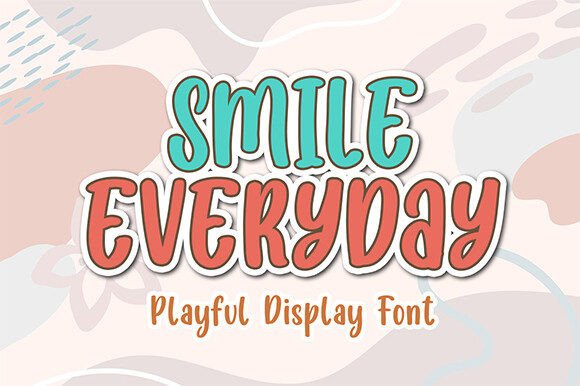
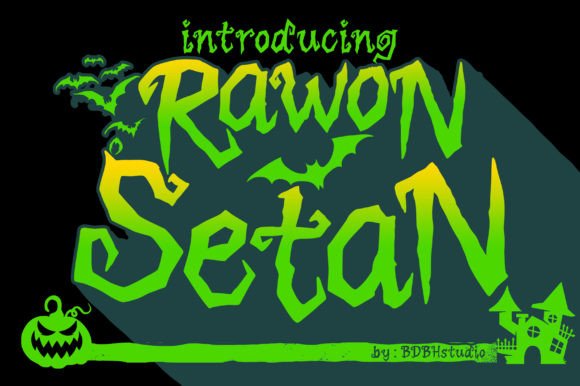
Visually, Rawon Setan is built for impact. Its letters are generously rounded, with bold strokes and gentle curves that give it both strength and sweetness. It’s not delicate like a script, nor rigid like a geometric sans serif—it lives in that joyful middle ground where authenticity meets playfulness. Think of it as the kind of font you’d choose for a handmade toy shop sign, a kindergarten classroom poster, or a sticker sheet meant to make kids giggle when they peel it off. It’s unapologetically chunky, yet never clumsy; whimsical, but always legible at a glance.
I’ve used Rawon Setan across real projects—no mockups, no placeholders. On kraft paper candle labels, its weight holds up beautifully against textured backgrounds. For printable wall art aimed at nurseries and early-learning spaces, it adds warmth without overwhelming the composition. And on boutique-style gift tags? It gives even simple twine-and-cardstock combos a polished, intentional feel. Because Rawon Setan is a display font first and foremost, it shines brightest in short, high-impact uses: product names, greeting card headlines, invitation titles, mug slogans, tote bag phrases, and seasonal signage like “Pumpkin Spice Season” or “Summer Camp Starts Now!”
That said, I’ve learned to respect its limits—and that’s part of what makes it so reliable. I don’t use Rawon Setan for body text, ingredient lists, or fine-print packaging details. It’s not built for paragraphs. But for anything meant to be seen, remembered, and felt—even before it’s read—it delivers every time. When laser-cutting vinyl stickers, I keep phrases under five words and avoid tiny sizes below 24pt to ensure clean cuts. For printed greeting cards, I test print at actual size first—its generous counters and open spacing mean it stays crisp even on uncoated stock.
Pairing Rawon Setan is where the fun deepens. I often layer it with a clean, neutral sans serif—think Montserrat Light or Inter Regular—for contrast and balance. On wedding welcome boards, I’ll set “Welcome to Our Day” in Rawon Setan and follow with names and times in a soft serif like Cormorant Garamond. For digital printables like planner pages or habit trackers, I pair it with a subtle handwritten font for notes or checkboxes—keeping Rawon Setan strictly for headers and section titles. The contrast creates rhythm, hierarchy, and visual breathing room.
What really sets Rawon Setan apart in my workflow is how consistently it supports brand voice—especially for makers who lean into warmth, nostalgia, or gentle humor. It doesn’t try to be trendy. Instead, it feels timeless in the way a well-loved storybook does: familiar, comforting, and quietly confident. That authenticity translates directly to how customers perceive handmade goods. A candle labeled with Rawon Setan reads as thoughtful—not mass-produced. A printable birthday kit using it feels curated, not generic. Even a simple “Thank You” tag gains sincerity when set in this font.
I’ve also used it across seasonal product lines with great results. Last winter, I designed a set of holiday cookie cutter labels—“Gingerbread Friends,” “Snowflake Sprinkles,” “Hot Cocoa Magic”—all in Rawon Setan over matte white sticker paper. The font’s rounded corners echoed the soft edges of the cookies themselves. In spring, I paired it with watercolor floral elements for a set of “Easter Egg Hunt” printable signs. And for back-to-school planner inserts? “First Day Feels” and “Big Kid Energy” landed perfectly—playful but grounded, just like the audience.
Before using Rawon Setan commercially—whether on physical products, digital templates, or SVG files—I always double-check the license. It includes standard OpenType features like stylistic alternates and basic ligatures, which add subtle charm without extra work. The file formats (OTF and WOFF) cover both desktop design and web use, and it supports extended Latin characters—enough for most English-language shop needs, plus common accents for bilingual greetings or international customer notes. No multilingual expansion needed for my current projects, but it’s reassuring to know the foundation is there.
One practical tip: if you’re prepping files for Cricut or Silhouette, convert Rawon Setan to outlines before saving as SVG. Its rounded terminals and consistent stroke weight cut cleanly, but only when vectorized properly. And for listing images on Etsy or social previews? Use Rawon Setan in your banner text or product title graphics—it grabs attention in crowded feeds without looking aggressive or artificial.
At its heart, Rawon Setan isn’t just another display font. It’s a quiet collaborator in the making process—one that helps handmade creators communicate joy, care, and intentionality without saying a word. Whether you're printing 50 candle labels or designing your first digital sticker pack, it shows up ready to support your vision—not overshadow it. It reminds me, every time I open it, that strong design doesn’t have to be serious to be effective. Sometimes, all it takes is a little playful weight, a lot of heart, and the right typeface.