Riuman: A Distinctive Display Font for Editorial Design
As someone who crafts blogs, digital magazines, print-ready workbooks, and branded newsletters, I pay close attention to how type shapes tone before a single word is read. That’s why Riuman stands out—not as background filler, but as a deliberate editorial voice. It’s a display font with quiet confidence: slightly quirky, warmly human, and surprisingly versatile across formats that demand both personality and precision.
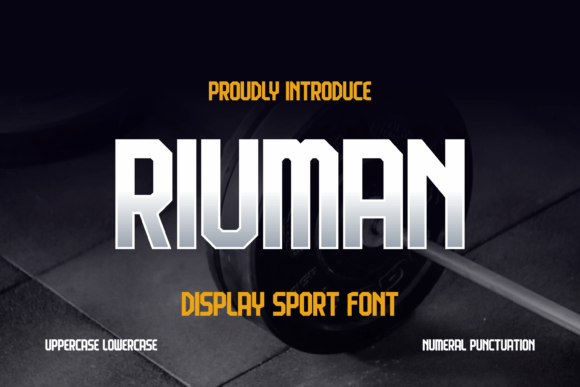
Riuman balances irregularity with intention. Its letterforms carry subtle asymmetry—soft curves, gentle slants, and unexpected terminals—that give it character without sacrificing clarity. It’s not a script font or a handwritten font, nor does it lean into rigid geometry like many modern typography trends. Instead, Riuman occupies a thoughtful middle ground: expressive enough for visual impact, structured enough for immediate recognition. That duality makes it especially valuable for creators building cohesive brand identity through consistent, readable design.
In editorial design, Riuman shines where attention matters most. Think of it anchoring a lifestyle blog’s featured post header—its presence signals importance while inviting curiosity. On a magazine cover, it delivers distinction at thumbnail size and impact at full scale. In an ebook title or chapter opener, it adds narrative texture without overwhelming the reader. And in printable guides or coaching workbooks, its warmth helps soften instructional content, making complex ideas feel more approachable.
For quote graphics and pull quotes—especially in newsletters or social media graphics—Riuman offers rhythm and emphasis without shouting. Its natural cadence supports brevity: a short phrase gains gravity, a line of wisdom feels intentional. Pair it with generous spacing and a neutral background, and you’ve got a moment of pause in otherwise dense layouts. That pause isn’t decorative—it’s functional reader engagement.
It’s worth noting what Riuman isn’t designed for: extended body copy. As a display font, it excels in titles, subtitles, section headings, cover text, and accent typography—not paragraphs. That’s not a limitation; it’s a strength. When used deliberately, Riuman strengthens visual hierarchy by creating clear, intuitive distinctions between headline and content. Readers instinctively know where to look first—and where to settle in.
Practical pairing is where Riuman reveals its editorial intelligence. Try it with a warm serif font for body text in long-form blog posts or digital magazines: the contrast reinforces structure while maintaining elegance. For digital-first newsletters or minimalist workbooks, pair it with a clean sans serif font—something with open counters and even weight distribution—to keep captions, navigation labels, and sidebars legible and unobtrusive. The goal isn’t contrast for contrast’s sake, but harmony that serves the reader’s eye and intent.
Across formats, Riuman holds up well. On screen, it renders crisply at larger sizes—even on mobile layouts—thanks to its balanced proportions and generous x-height. In PDF exports for ebooks or printable planners, it remains sharp and distinctive, provided embedding permissions are respected. For print materials like wedding guides or workshop handouts, its friendly yet refined presence adds tactile appeal without compromising reproducibility.
Before integrating Riuman into client-facing or commercial projects, verify licensing details. It’s a premium font intended for professional use—but that means it comes with appropriate commercial rights for ebooks, templates, paid newsletters, digital downloads, and printables. If your workflow includes distributing branded assets or selling downloadable content, confirm that the license covers those uses. Many designers overlook this step until a template launch or client delivery, so checking early saves time and ensures ethical use of design assets.
Consider how Riuman might elevate specific projects. A recipe ebook benefits from its inviting tone—titles feel crafted, not algorithmic. A creator newsletter gains cohesion when Riuman anchors headlines and key takeaways, reinforcing a recognizable voice across issues. A digital magazine uses it for issue titles and recurring column headers, building familiarity over time. Even a printable planner finds new life with Riuman guiding weekly themes or habit trackers—its personality adds motivation without clutter.
What makes Riuman especially useful for independent publishers is its consistency across styles. Check whether your version includes multiple weights, alternates, or ligatures—they can add nuance without switching fonts. Some versions offer stylistic sets that refine certain characters for tighter tracking or softer endings, useful when fine-tuning a cover or optimizing space in a narrow newsletter column. Multilingual support is another practical detail: if your audience spans regions or languages, verify glyph coverage for accented characters and non-Latin scripts.
Ultimately, Riuman supports more than aesthetics—it supports intention. Every time you choose it for a heading, a quote, or a brand mark, you’re signaling care in how ideas are framed and received. That care translates directly to reader trust. In an era where attention is fragmented and content competes fiercely, thoughtful typography like Riuman doesn’t just decorate—it clarifies, connects, and endures.
When selecting fonts for editorial work, we’re not just choosing letters—we’re choosing tone, pacing, and relationship. Riuman invites readers in without demanding attention. It gives structure without rigidity. And in the quiet moments between words—the margins, the pauses, the first glance—it makes space for meaning to land.