Min Fina: A Display Font That Anchors Retro-Boho Energy in Campaigns
Last Tuesday, I was finalizing a set of Instagram Story frames for a client’s summer content series—think hand-drawn botanical motifs, warm peach-and-cream gradients, and punchy, scroll-stopping text. The headline needed to feel intentional but effortless: not too polished, not too scrappy. I tried three fonts before landing on Min Fina. Instantly, the tone clicked—like the visual equivalent of a well-curated thrift-store find: nostalgic, grounded, quietly confident. That’s when I knew this wasn’t just another display font—it was a campaign collaborator.
What Min Fina Actually Feels Like (Not Just What It Looks Like)
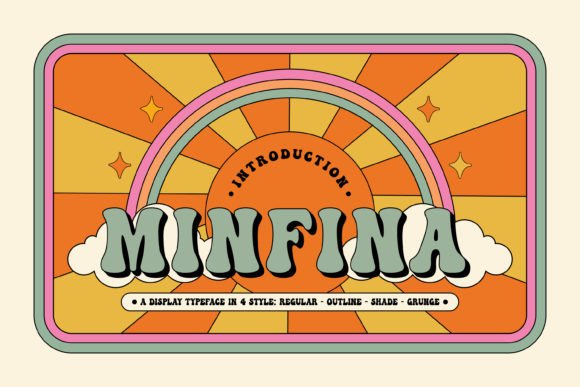
Min Fina sits at that sweet intersection of retro warmth and modern restraint. Its letterforms have soft, slightly rounded terminals and gentle contrast—not rigid like a geometric sans, not ornate like a vintage script. There’s a subtle boho rhythm in the lowercase a, g, and e, and the uppercase letters carry quiet presence without shouting. It doesn’t mimic 70s psychedelia or 90s grunge; instead, it distills their emotional texture—casual authenticity, tactile charm, approachable creativity.
In practice, that means Min Fina works best where personality matters more than precision: product teaser headlines, course launch banners, Pinterest quote pins, YouTube thumbnail titles, Reels cover text, and branded email headers. It’s not built for body copy, dense pricing tables, or legal disclaimers—and that’s by design. As a display font, its strength is in impact, not endurance.
Where It Shines (and Where It Steps Back)
I tested Min Fina across six real campaign touchpoints:
- Instagram feed posts: Paired with a clean sans serif (like Inter or Poppins) for captions, Min Fina gave the headline instant warmth—especially over textured backgrounds or soft-focus imagery. On mobile, its generous x-height and open counters kept readability strong even at 48pt on small screens.
- YouTubе thumbnails: At 120px width, the bold weight held up cleanly against busy visuals. No pixelation, no blurring—even on compressed previews. The rounded shapes softened sharp edges without sacrificing clarity.
- Pinterest pins: Vertical composition favors Min Fina’s balanced proportions. It didn’t compete with photography; it complemented it—adding voice without volume.
- Email banners: Used as a single-line headline over a light gradient, it created immediate hierarchy. Subscribers paused longer—less “skim,” more “read.”
- Digital ads (Meta & Google Display): Performed reliably across formats, though I avoided using it below 36pt in carousel ads—smaller sizes lost some of its character on low-res previews.
- Branded template kits: Clients loved how Min Fina elevated Canva-style templates without requiring design expertise. Its vibe translated consistently across social, email, and PDF handouts.
It’s not ideal for fast-paced, high-data contexts: think comparison charts, multi-step instructions, or formal webinar registration pages where neutrality and speed matter more than mood. And while it handles short phrases beautifully (“New Collection Live,” “Join the Waitlist,” “Your Summer Toolkit”), avoid stacking more than two lines of Min Fina in tight spaces—it’s meant to breathe.
Pairing It Right—No Guesswork Needed
Min Fina thrives in contrast. I default to pairing it with a neutral, highly legible sans serif—something airy and functional, like Inter, Manrope, or Commissioner. That combo gives you personality + practicality: Min Fina sets the tone; the sans carries the detail. For print or editorial-leaning campaigns, a warm, low-contrast serif (like IBM Plex Serif or Cormorant Garamond) adds quiet sophistication without clashing.
Avoid pairing it with other decorative fonts—especially scripts or heavy serifs. Min Fina has presence, but it’s not loud. Overloading it dilutes its charm. And skip monospaced or ultra-thin fonts—they create visual tension instead of harmony.
Before You Drop It Into Your Next Campaign
Min Fina ships with OpenType features worth checking: stylistic alternates (like a swash Q or looped y), ligatures for smoother word flow, and at least two weights (Regular and Bold). Make sure your design tool supports them—I’ve seen subtle shifts in rhythm when turning on discretionary ligatures in Figma or Adobe apps.
File formats matter too: TTF and OTF are standard, but if you’re building web banners or embedding in email HTML, confirm WOFF/WOFF2 support. Licensing is straightforward—commercial use is included—but always verify usage rights if you’re bundling Min Fina into client-branded digital products, merch, or editable template packs.
One last note: Min Fina includes basic Latin multilingual support (accents, diacritics), but test key phrases if your audience uses extended characters—especially for French, Spanish, or Scandinavian languages. It handles most common needs gracefully, but never assume.
Realistic Expectations, Real Campaign Wins
Min Fina won’t fix weak messaging or poor image selection. But it *will* help your visuals land with more intention. It’s the kind of premium font that makes people say, “This feels like *them*”—not because it’s flashy, but because it’s cohesive, considered, and quietly expressive. Whether you’re launching an online shop, designing a webinar series, or building a seasonal content calendar, Min Fina gives your display text a point of view that aligns with creative, human-centered brand identity—not algorithm-first aesthetics.
It’s not the only font you’ll need. But when you need warmth, character, and calm confidence in one typeface? Min Fina earns its place in the toolkit.