Smile Child: A Friendly, Polished Display Font for Small Business Branding
It was 8 a.m. on a Tuesday — flour dust still on my apron, coffee cooling beside a stack of blank product labels — and I was redesigning packaging for our small-batch oat milk chocolate bars. We’d outgrown the handwritten font we’d used for launch, but the “professional” options we tried felt cold or overly corporate. Then I tested Smile Child. Within minutes, the label looked like it belonged on a shelf next to brands customers already trusted — warm, intentional, and unmistakably ours.
What Smile Child Feels Like (Before You Even Read the Words)
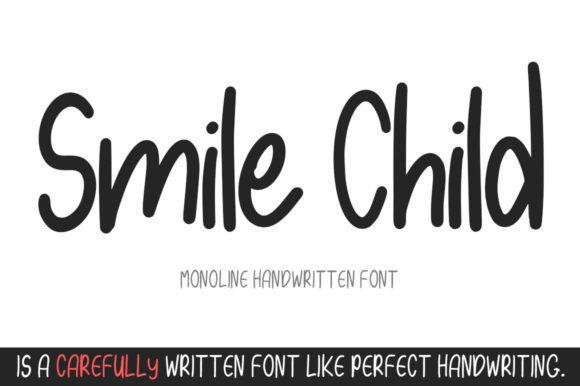
Smile Child is a modern display font with gentle curves, open letterforms, and just enough personality to stand out — without shouting. It’s not a script, not a serif, not a rigid sans serif. It lives in that sweet spot between approachable and polished: think rounded ‘a’ and ‘g’, soft terminals, balanced spacing, and subtle contrast in stroke weight. It doesn’t try to be cute — it’s confident, calm, and quietly joyful. That’s why it works so well for businesses where tone matters as much as aesthetics: a ceramicist’s studio tag, a herbalist’s apothecary label, or a children’s book illustrator’s Instagram banner.
Where It Shines in Real Business Materials
We put Smile Child through its paces across six customer-facing touchpoints — and each time, it elevated consistency without extra design work:
- Product labels & packaging: Printed at 10–12 pt on matte kraft stickers, Smile Child stayed legible and friendly — no squinting, no “what does that say?” moments. Its generous x-height and clear letter shapes (especially the lowercase ‘e’, ‘s’, and ‘c’) made small-format text feel intentional, not cramped.
- Menu boards & café signage: At 36 pt on a chalkboard-style digital menu, it read instantly from across the room — no thin strokes disappearing, no awkward kerning gaps. The rhythm feels natural, like handwriting you’d want to trust.
- Thank-you cards & gift tags: Paired with a light-weight sans serif for body text, Smile Child gave our hand-packaged orders a cohesive, handmade-but-polished vibe. Customers noticed — several mentioned how “thoughtful” the cards felt.
- Instagram templates & online shop banners: On mobile screens, Smile Child held up beautifully in thumbnails and story highlights. Its clean outlines avoided pixelation, and its moderate width kept headlines from wrapping awkwardly on small viewports.
- Logo lockups & brand marks: Used solo (no icon needed) for our seasonal “Spring Blend” label, it communicated freshness and care — more so than any abstract symbol could.
Typography That Builds Trust — Without Saying a Word
Here’s what most small business owners don’t realize: typography is your first handshake with a customer. Smile Child helps create that moment of recognition and ease — especially important when you’re competing for attention in crowded markets like handmade skincare, artisanal food, or indie home goods. It signals care in execution: consistent spacing, refined curves, and balanced proportions tell people you pay attention to detail. That perception transfers directly to how they view your product quality and reliability.
And because it’s designed as a display font, Smile Child isn’t meant for paragraphs — and that’s a strength. It’s built for impact: headlines, logos, short phrases, packaging titles, and social media hooks. Use it where you want eyes to land and linger — then pair it thoughtfully with something legible for longer text.
Simple Pairings That Just Work
You don’t need a design degree to pair Smile Child well. In practice, these combinations kept things clean and cohesive:
- With a neutral sans serif (like Inter, Poppins, or Montserrat Light): Ideal for menus, product descriptions, or website body text. The contrast gives Smile Child room to breathe while keeping everything grounded and readable.
- With an elegant serif (like Playfair Display or Cormorant Garamond): Perfect for boutique tags, wedding stationery, or premium skincare packaging — adds quiet sophistication without stiffness.
- With a delicate script (used sparingly — e.g., “hand-poured” beneath a candle jar title): Adds texture and craft, as long as the script stays light and minimal. Smile Child’s warmth keeps the combo from feeling fussy.
Pro tip: Always test your pairing at actual size — on the label, card, or screen you’ll use it on. What looks balanced on a desktop may feel unbalanced on a 2-inch sticker.
Before You Install: A Quick Licensing & Technical Check
Smile Child is a commercial font, and it’s licensed for real-world business use — including printed packaging, digital ads, client projects, and downloadable templates. Before adding it to your brand toolkit, double-check that your license covers:
- Use on physical products (e.g., labels, boxes, merch)
- Embedding in PDFs or digital downloads
- Web use via @font-face (if using on your site)
- Included file formats (OTF and WOFF are most versatile)
- Available weights and alternates — Smile Child includes stylistic sets and ligatures that add subtle polish to words like “love”, “shop”, or “handmade”
It also supports Latin-based languages well — great if your audience spans multiple English-speaking regions or includes common European accents.
Smile Child won’t fix inconsistent branding on its own — but it *does* make consistency easier to achieve. When your logo, label, menu, and Instagram story all share the same expressive, human-centered voice, customers begin to recognize you before they even see your name. That’s not magic. It’s smart typography — done kindly.