Zombie Food: A Playful Display Font for Digital Branding
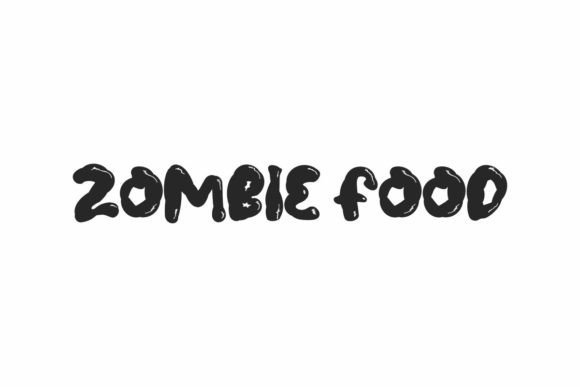
As a UI designer who builds landing pages, SaaS dashboards, and boutique e-commerce experiences, I’m constantly balancing personality with performance. That’s why Zombie Food stands out—not as a novelty, but as a highly intentional display font that delivers tone without sacrificing clarity. It’s not a script or serif font, nor does it try to be neutral. Instead, Zombie Food leans into its whimsical, modern character with clean outlines, subtle irregularities, and balanced proportions—making it surprisingly versatile in digital contexts where voice matters.
In practice, Zombie Food excels where you need instant recognition and emotional resonance: hero section headlines, product launch banners, course title cards, and brand-focused content sections. Its letterforms carry rhythm and charm without visual noise—no excessive swashes or forced distortion—so it remains legible even at 48px on mobile viewports. I’ve used it successfully on dark-mode interfaces (with light tracking adjustments) and over textured image overlays, thanks to its strong x-height and generous counters.
Where Zombie Food Fits in Your Layout Hierarchy
This isn’t a body text font—and it shouldn’t be. Zombie Food is built for impact, not endurance. Use it for:
- Hero titles on conversion-focused landing pages—especially for creative services, indie games, or playful edtech brands;
- Section headers in portfolio websites, where contrast with a neutral sans serif (like Inter or Manrope) creates clear visual breathing room;
- CTA buttons in email campaigns or app onboarding flows—when kept short (“Get Started”, “Join the Fun”) and paired with ample padding;
- Branded banners for online stores selling handmade goods, subscription boxes, or lifestyle products with a lighthearted ethos;
- Digital ad headlines on Instagram or Meta—where fast scanning demands distinct shape recognition and tonal alignment.
It works especially well when your brand voice leans into curiosity, warmth, or gentle irreverence—think coaching sites that avoid corporate stiffness, indie game studios, or eco-brands using humor to disarm skepticism. It’s not for law firm homepages or enterprise SaaS documentation—but that’s by design.
Readability & Responsiveness in Real Use
On mobile, Zombie Food holds up best above 36px. Below that, details soften—so avoid using it for subheadings smaller than 28px unless paired with generous line height and contrast. For responsive layouts, I default to CSS clamp() values like clamp(28px, 4vw, 48px) to preserve presence across devices.
Background matters: it performs cleanly on solid light or dark backgrounds, but avoid low-contrast combos (e.g., gray-on-gray). When overlaid on photos, use a subtle semi-transparent background or text shadow—never rely solely on outline or stroke effects, which degrade on high-DPI screens. Also note: while Zombie Food includes standard Latin glyphs and common punctuation, verify multilingual support if your audience spans accented languages—it’s optimized for English-first digital experiences.
Smart Pairing for Professional Balance
A display font only shines when supported. With Zombie Food, I consistently pair it with a highly legible, variable sans serif for body copy—Inter, Poppins, or Space Grotesk work particularly well. Their geometric neutrality lets Zombie Food lead without competing. For editorial-style blogs or digital magazines, a warm serif like Literata or Crimson Pro adds sophistication while keeping hierarchy intact.
Avoid pairing with other decorative fonts—even friendly ones. Two personalities dilute focus. And skip monospace or ultra-thin weights for supporting text; they clash with Zombie Food’s grounded playfulness. Stick to one primary weight for headings (usually Regular or Bold), and let spacing and color do the rest of the work.
Licensing, Formats & Practical Delivery
Zombie Food ships as a premium font with web-optimized WOFF2 files, making integration into modern CSS @font-face declarations straightforward. It includes OpenType features like ligatures and stylistic alternates—useful for fine-tuning logo lockups or branded social graphics. No variable axis, but multiple static weights ensure flexibility for different emphasis levels.
Licensing is commercial-ready: you can embed Zombie Food on client websites, SaaS platforms, Shopify themes, and digital templates—as long as usage aligns with the license tier (check for pageview limits if deploying at scale). For agencies, bundling it into brand kits or design systems is fully permitted under extended licenses. Just remember: never self-host and serve via public CDN without verifying redistribution rights.
When to Choose Zombie Food Over Other Display Fonts
Compared to handwritten fonts or aggressive retro display faces, Zombie Food avoids fatigue. It doesn’t shout—it invites. Unlike many “fun” typefaces, it maintains typographic integrity: consistent baseline alignment, logical kerning pairs, and optical sizing that translates across devices. That makes it safer for long-term brand use—not just a one-off campaign asset.
If your goal is to signal creativity without sacrificing polish—or to differentiate a digital product in a crowded space—Zombie Food earns its place as a strategic design asset. It’s not about being “zany.” It’s about being memorable, human, and unmistakably yours.