Faston: A Modern Display Font That Elevates Digital Branding
I was halfway through refining the hero section of a boutique coaching site when I paused—something felt off. The headline had presence, but not *personality*. It wasn’t commanding attention the way the brand’s voice deserved. That’s when I swapped in Faston, and instantly, the whole layout clicked. Not because it’s loud or flashy, but because it’s confidently modern: clean lines, subtle rhythm, and just enough character to feel human—not robotic, not sterile.
A Display Font Built for Impact, Not Just Decoration
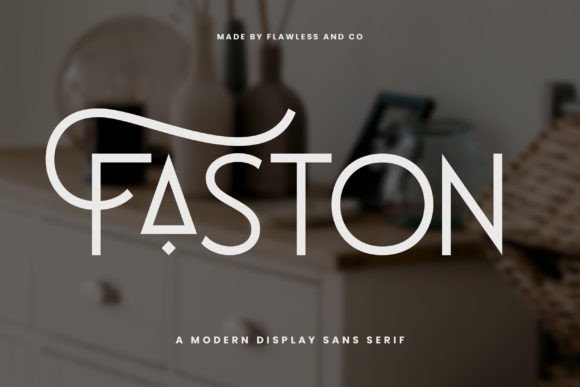
Faston is a contemporary display sans serif font—designed specifically to shine where first impressions matter most. Think hero headlines, landing page titles, CTA buttons, and branded banners. It’s not trying to be everything; it’s built to do one thing exceptionally well: communicate energy, clarity, and intention at a glance. Its letterforms balance geometric precision with organic warmth—notice how the lowercase “a” opens generously, or how the terminals on “t” and “f” taper with quiet confidence. It doesn’t shout—it leans in.
In practice, Faston performs beautifully over image backgrounds, especially with light text on dark overlays or bold white on muted photography. I tested it across devices: crisp at 48px on desktop, still legible and expressive at 36px on tablets, and surprisingly strong—even at 28px—on mobile hero sections when paired with generous line height and contrast. It’s not a body font, and it shouldn’t be. But as a display font? It delivers exactly what modern web design demands: distinction without distraction.
Where Faston Truly Shines Online
Here’s where Faston earned its place in my design toolkit:
- Landing page headlines — On a course sales page, Faston gave the main title an elevated, premium feel without veering into cold minimalism. Customers scrolled slower, lingered longer.
- CTA buttons — Paired with a tight tracking adjustment, it added subtle urgency and polish to primary action buttons (“Start Learning,” “Get Early Access”). No extra icons needed.
- Section dividers & subheads — Used sparingly in an “About” or “Process” section, it created visual breathing room and reinforced hierarchy without competing with body copy.
- Branded digital assets — From social media cover images to email header graphics, Faston scaled cleanly across formats and maintained its integrity in PNG, SVG, and webfont exports.
It also worked beautifully in a portfolio site’s project thumbnails—short, punchy titles like “Brand Identity Refresh” or “Landing Page Redesign” gained instant credibility. No extra styling required. Just type, adjust weight, and go.
Smart Pairing & Practical Web Considerations
Like any great display font, Faston thrives in conversation—not isolation. I consistently paired it with a neutral, highly legible sans serif for body text (think Inter, Poppins, or even system fonts like -apple-system) and found the contrast elevated both elements. For more editorial or boutique sites, a gentle serif like Lora or Cormorant Garamond added lovely texture in testimonials or blog headers—while keeping Faston reserved for moments that demand focus.
Before deploying, I checked what came in the package: multiple weights (Light, Regular, Medium, Bold), true italics, OpenType features including stylistic alternates and ligatures—and crucially, WOFF2 support for fast loading. No SVG-only nonsense. It imported cleanly into Figma, exported smoothly to Webflow, and loaded reliably in WordPress with proper font-display fallbacks. Licensing was clearly stated for commercial use—including client websites and SaaS dashboards—so no last-minute licensing panic before launch.
Readability Realities: When (and When Not) to Use Faston
Faston excels where brevity meets intention. It’s ideal for short, high-impact phrases—but not for long paragraphs, navigation menus, form labels, or dense dashboard interfaces. On small screens, I avoided using it below 24px for anything interactive (like secondary CTAs), and never for accessibility-critical text like error messages or alt-text equivalents. Its charm lies in its restraint.
I also tested it against common contrast pitfalls: light gray text on white? Too faint. Faston needs contrast to breathe. Dark mode previews? Excellent—especially with its Bold weight on charcoal backgrounds. Over busy imagery? A subtle text shadow or background tint helped maintain readability without sacrificing elegance.
More Than a Font—A Brand Tone Anchor
What surprised me most wasn’t just how good Faston looked—it was how consistently it shaped tone. On a wellness brand’s homepage, it conveyed calm authority. On a creative studio’s portfolio, it felt energetic and forward-looking. On a sustainable product landing page, it read as intentional and grounded. That’s the power of a well-designed display font: it quietly reinforces your brand’s voice before a single word is read.
If you’re selecting fonts for a new site—or refreshing an existing one—ask yourself: does this typeface reflect who you are, not just what you sell? Faston doesn’t try to be friendly, edgy, or traditional. It’s simply *contemporary*, with warmth baked into its structure. And in today’s digital landscape, that kind of quiet confidence is rare—and invaluable.