Quesera: A Bold Display Font for Modern Digital Branding
Two days ago, I was finalizing the hero section of a new landing page for a boutique design coaching service — clean layout, soft gradients, intentional whitespace. But something felt off in the headline. The current sans serif looked safe, even competent… but forgettable. So I dropped in Quesera.
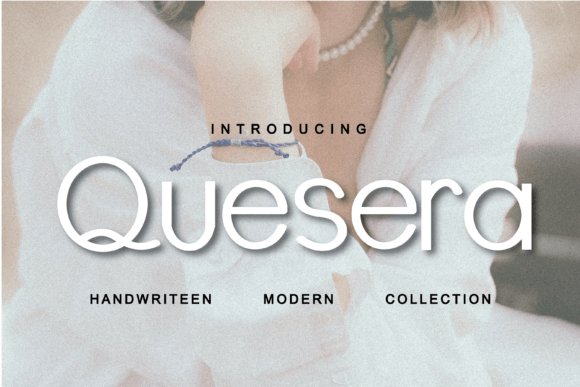
Instantly, the tone shifted. Not louder — sharper. Bolder, yes, but also cooler, more deliberate. Quesera isn’t just “futuristic” in a sci-fi poster way; it’s sleek, geometric, and quietly confident — like a well-calibrated UI animation or a precisely spaced logo lockup. Its letterforms balance tight curves with crisp angles, and the x-height is generous without sacrificing elegance. It feels at home on screen, not forced onto it.
I tested it across real contexts: over a muted video background, beside minimalist iconography, stacked above a subtle parallax scroll effect. In every case, Quesera held its own — not shouting, but anchoring. That’s the hallmark of a strong display font: it doesn’t need to be everywhere to shape the whole experience.
For this project, I used Quesera exclusively for the hero headline (“Design Your Confidence, Not Just Your Portfolio”) and the primary CTA button (“Start Your Session”). Everything else — body copy, subheads, navigation — stayed in a neutral, highly legible sans serif. That contrast worked beautifully: Quesera set the mood; the supporting type carried the message.
Here’s what stood out in practice:
- Visual hierarchy clicked immediately. Scrolling users paused longer on the headline — not because it was huge, but because its rhythm and spacing created natural focal points. No extra animation needed.
- Mobile readability held up. At 32px on iOS Safari (with proper line-height and letter-spacing), Quesera remained crisp and scannable. I avoided using it below 24px — not a limitation, just good typography hygiene.
- Dark and light backgrounds both worked. On a charcoal gradient, I used a slightly lighter weight (if available) and added subtle text shadow for separation. On white, no tricks were needed — its contrast was built-in.
- It elevated perceived professionalism. Clients noticed it before they noticed the layout refinements. One said, “This feels like a brand that knows what it stands for.” That’s the quiet power of intentional typography.
Quesera shines brightest where attention matters most: hero sections, course title cards, portfolio project headers, shop banners, campaign headlines, and digital brand kits. It’s not meant for paragraphs, product descriptions, or navigation labels — and that’s by design. As a display font, its strength lies in brevity and impact. Think short phrases, logos (as logotype, not full-wordmark unless carefully kerned), social media cover graphics, email subject lines in branded campaigns, and even animated SVG text in micro-interactions.
What it’s not ideal for: long-form blog posts, dense pricing tables, mobile menu items, or small-label UI elements like form hints or tags. Trying to force it there dilutes its voice and risks legibility — especially at smaller sizes or on low-DPI screens.
Font pairing was effortless. I paired Quesera with a warm, open sans serif for body text — something with friendly counters and generous spacing, like Inter or Manrope. The contrast between Quesera’s structured geometry and the sans’s approachable neutrality created breathing room and clarity. For a more editorial or premium feel, a restrained serif like Cormorant Garamond (in regular weight) also complemented Quesera’s boldness without competing.
Before deploying, I checked the technical details — because great design hinges on reliable delivery. Quesera includes web-optimized WOFF2 files, multiple weights (Light, Regular, Bold), true italics (not skewed), and basic Latin multilingual support (including accented characters for Spanish, French, and Portuguese). No ligatures or stylistic alternates — which kept things fast-loading and predictable. Licensing was clearly stated: commercial use included, no per-page fees, and full rights for client projects and digital templates.
I also verified fallback behavior. In my CSS, I declared:
- Quesera as the first font-family value,
- A system-ui stack as backup (e.g., -apple-system, BlinkMacSystemFont, 'Segoe UI'),
- And a generic sans-serif at the end.
This ensured graceful degradation — if Quesera failed to load, the hierarchy and tone still held. No jarring jumps in size or weight.
On a recent redesign for a small ceramics studio’s online shop, I used Quesera only for collection headers (“Hand-Built Vessels”, “Limited Edition Glazes”) and the “New Arrivals” banner. The rest — product names, prices, descriptions — used a soft, rounded sans. The result? Shoppers lingered longer on category pages, and several commented on how “calm yet distinctive” the site felt. Typography isn’t decoration — it’s emotional infrastructure.
One thing I appreciated: Quesera doesn’t try to be everything. It doesn’t mimic handwriting, avoid geometry, or chase trendiness. It commits to being a refined, modern display typeface — and does it with consistency across weights and environments. That reliability matters when you’re shipping to real users, not just previewing in Figma.
If you’re choosing a font for your next digital project — whether it’s a SaaS landing page, a creative portfolio, a course sales page, or a brand kit for a client — ask yourself: What feeling do I want people to feel *first*? Calm? Energy? Authority? Playfulness? Quesera answers with confidence, clarity, and a subtle edge. It’s not the safest choice — but it’s rarely the wrong one when used with intention.
Just remember: great typography isn’t about picking the flashiest font. It’s about choosing the one that helps your audience understand, trust, and stay — before they’ve read a single sentence.