Merry Lenny: A Display Font That Nails Retro Charm
It was 3 p.m. on a Tuesday—two days before launching a summer-themed Instagram content series—and I was tweaking the thumbnail for our first reel. The concept? “Retro Rewind”: a playful, analog-inspired look at classic design principles. I’d already mocked up the layout in Figma, but something felt off. The headline text looked too safe, too neutral—like it belonged on a corporate slide deck, not a vibrant, scroll-stopping visual. That’s when I pulled up Merry Lenny.
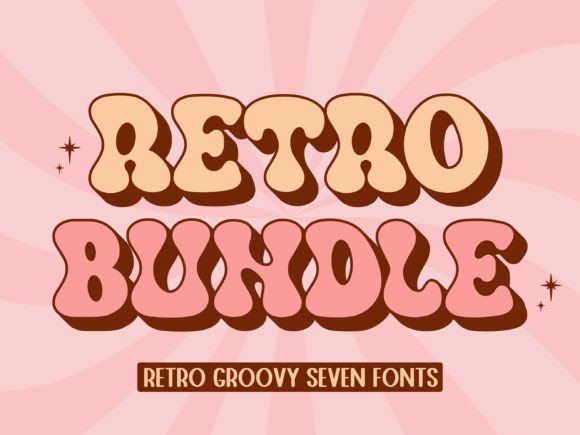
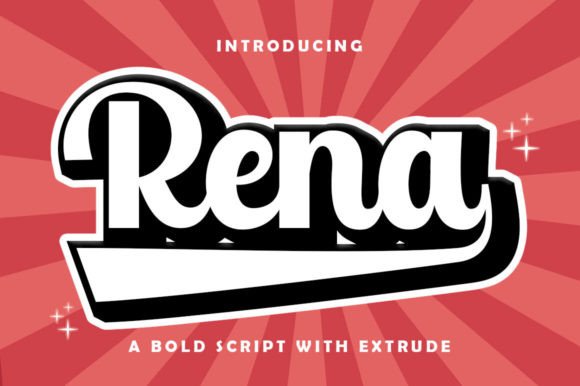
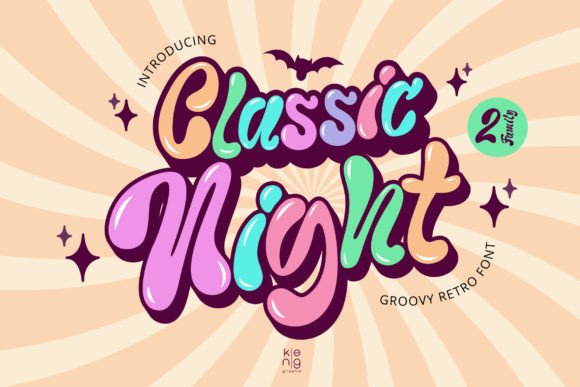
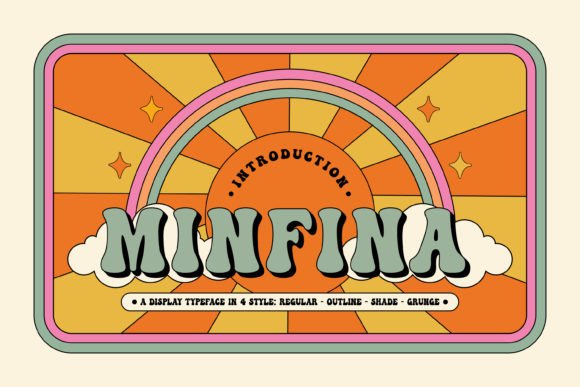
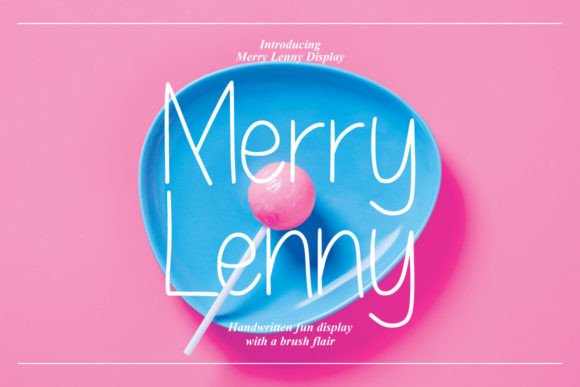
Merry Lenny isn’t just another retro font—it’s a masterfully designed display font with unmistakable vintage personality. Think late-’70s diner signage meets early-’80s arcade cabinet lettering: rounded terminals, subtle bounce in the curves, and that warm, hand-drawn imperfection that signals “fun,” “nostalgic,” and “unapologetically human.” It doesn’t try to be everything—it leans all the way into its role as expressive, eye-catching display type.
Where Merry Lenny Shines in Real Campaign Work
In practice, Merry Lenny excels where attention is fleeting and tone matters most. I used it across five touchpoints in that same campaign:
- Instagram post headers—for teaser lines like “Your Design Time Machine Is Ready” (paired with a clean sans serif for body copy)
- YouTube thumbnails—as the bold, centered title overlay on a sun-faded photo background
- Pinterest pins—in vertical quote graphics, where its rhythm helped guide the eye down the image
- Digital ad banners—scaled large enough to retain legibility even at 320px width on mobile previews
- Webinar landing page hero text—set at 64px on light cream, with generous letter-spacing to let each glyph breathe
The font’s character works hardest when it’s given space—not crammed into tight layouts or competing with busy imagery. On dark backgrounds, I added a subtle white stroke to ensure contrast without losing warmth. On light backgrounds, no effects were needed: Merry Lenny’s natural weight and spacing held up cleanly.
Readability & Responsiveness: What You’ll Actually See on Screen
Let’s be real: not every retro font survives the mobile preview test. Merry Lenny does—but with boundaries. At sizes under 28px, especially over textured or low-contrast backgrounds, some glyphs (like the lowercase a or g) begin to soften visually. That’s fine. It’s not built for paragraph text or dense captions. It’s built for moments: the first two seconds of a scroll, the top third of a thumbnail, the banner above your email CTA.
I tested it across devices: crisp on iPad Pro, friendly on iPhone 14, still recognizable—even if slightly softer—on older Android screens. For fast-scrolling feeds, its distinct silhouette (that cheerful, slightly uneven baseline) made it instantly scannable. People didn’t read it slowly—they recognized it, then paused.
Smart Pairing Keeps the Vibe Intentional
Merry Lenny thrives when paired with intentional contrast. I default to a neutral, geometric sans serif—think Inter, Poppins, or even system fonts like SF Pro—for supporting text. The pairing creates instant hierarchy: Merry Lenny sets the mood; the sans serif delivers the message. No competition, no confusion.
For more editorial-leaning projects—say, a branded template pack for creators—I’ve layered it with a quiet serif (like Playfair Display) for subheads. And while it *can* sit beside a delicate script font in a logo lockup, I only do that when the script is ultra-minimal (no flourishes) and tightly kerned—otherwise, the energy clashes.
When to Pause Before Using Merry Lenny
This isn’t a Swiss Army knife. It won’t carry long-form web copy, legal disclaimers, or data-heavy infographics. Avoid it in formal B2B contexts unless irony is part of the brand voice. Skip it for tiny UI labels, navigation menus, or anything smaller than 20px at standard viewing distance.
Also check what you’re actually licensing. Merry Lenny is a commercial font—great for client work, digital ads, and merch—but verify file formats (OTF/TTF/WOFF), included weights (it ships with one robust weight, no italics or thin variants), and multilingual support (basic Latin extended, no Cyrillic or Arabic). If your campaign targets global audiences or includes accented characters, test those glyphs early.
Designing With Intention, Not Just Aesthetic
What makes Merry Lenny more than decorative is how clearly it communicates *attitude*. In that Instagram series, it didn’t just say “retro”—it said “playful nostalgia, accessible, warm, inclusive.” That shaped how we framed the visuals, chose color palettes (mustard, teal, soft coral), and even wrote captions (“Remember when fonts had personality?”).
It also quietly reinforced consistency. Because Merry Lenny has such a strong voice, using it only for primary headlines—and never for secondary text—created an intuitive visual rhythm across 12+ assets. Followers began to associate that bouncy, rounded shape with the series itself. Not because we told them to, but because the typeface earned its place in the brand language.
If you’re building templates, launching a product with personality, or simply tired of generic headlines that vanish in the feed—Merry Lenny is worth pulling from your font library. It’s not about chasing trends. It’s about choosing a display font that carries intention, performs reliably, and reminds people that good typography still has soul.