Vibe: A Font That Pops
There’s a moment in every design project when you open a blank brand board and feel the weight of possibility. That’s when I first tested Vibe. It wasn’t just another font; it was a spark, a visual statement waiting to be made. I was working on a boutique identity project for a local flower shop, and I needed something that felt fresh, bold, and slightly whimsical. Vibe came through with flying colors.
A Bold Statement with Personality
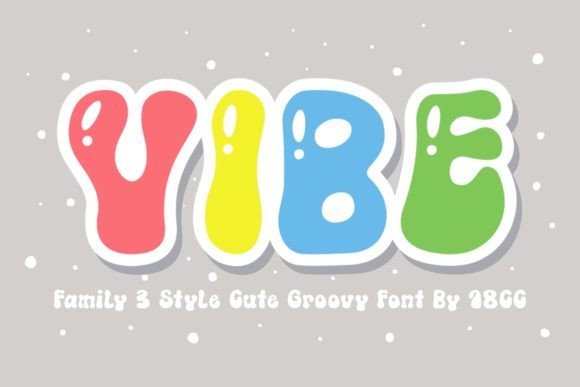
Vibe is an exuberant display font with a playful yet confident personality. Its curves are energetic, its serifs are expressive, and its overall vibe is one of enthusiasm. It feels like it was designed for moments that need to stand out—covers, posters, spring designs, marketing materials. It’s not about subtlety; it’s about making an impression.
What sets Vibe apart is its balance between flair and legibility. While it’s definitely a display font, it doesn’t lose itself in ornamentation. The letterforms are well-proportioned and maintain a consistent rhythm, which makes it surprisingly versatile. I found myself using it for both headlines and short phrases, especially where a bit of character could elevate the message without overshadowing it.
Testing Vibe in Real Design Work
I used Vibe across several elements of the boutique project: the logo draft, brand board, packaging mockup, business card, website header, and social media layout. Each time, it brought a different kind of energy. On the logo, it added a sense of fun and approachability. On the packaging, it gave the products a lively, seasonal feel that aligned perfectly with the brand’s aesthetic.
One of my favorite uses was on the website header. Vibe’s boldness translated well into digital space, especially when paired with a clean sans-serif body text. It created a nice contrast that kept the page visually engaging without overwhelming the reader. On Instagram posts, it worked as an accent font, drawing attention to key phrases while keeping the rest of the design grounded.
However, I also noticed some limitations. Vibe isn’t the best choice for long body text or small sizes. When I tried using it on a product label, it became too dense and hard to read at smaller points. It’s more suited for short phrases, headlines, and decorative elements rather than extended content.
Font Pairing and Stylistic Flexibility
When it comes to pairing Vibe with other fonts, the possibilities are exciting. I found that it works well with modern sans serif fonts for a contemporary look or with elegant serif fonts for a more refined balance. It also pairs nicely with script or handwritten fonts in a complementary way, adding texture without clashing.
Vibe includes several styles and weights, which adds to its versatility. The alternates and ligatures give it a nice touch of customization, allowing designers to fine-tune the look depending on the project’s needs. The multilingual support is a plus, making it suitable for international projects or those targeting diverse audiences.
For web use, the font is available as a webfont, which is great for digital assets. It performs well in both desktop and browser environments, maintaining clarity and style across platforms. This makes it a solid choice for websites, social media graphics, and even editorial design work.
When to Use Vibe—and When Not To
Vibe is best used as a display font, headline font, or accent font. It’s perfect for branding projects that require a pop of personality, whether it’s a logo, a poster, or a social media post. However, it’s not ideal for formal corporate settings or long-form content where readability is key.
If you’re working on a project that requires a more traditional or professional look, Vibe might not be the right fit. Similarly, if you’re designing for print-on-demand products or merchandise that will be scaled down, it’s worth testing the font at smaller sizes before finalizing your design.
Always remember to check the commercial font licensing before using Vibe in client work, brand identity, packaging, templates, or digital products. Licensing can vary depending on usage, so it’s important to understand the terms to avoid any legal issues.
A Font That Adds Character
In the end, Vibe is more than just a font—it’s a tool for expression. It brings energy, personality, and a sense of fun to any design project. Whether you’re refreshing a café’s visual identity, creating a skincare brand, or designing a bakery’s packaging, Vibe has the potential to make your work stand out.
It’s not for everyone, but for those who appreciate a font that pops and wants to add a touch of exuberance to their design, Vibe is a great choice. Just remember to test it in context, pair it wisely, and always consider the purpose of your design. With the right application, Vibe can become a signature element of your brand’s visual language.