Octans: A Display Font That Adds Charisma to Digital Headlines
Two weeks ago, I was finalizing the hero section of a new landing page for a boutique coaching brand — clean layout, warm photography, intentional whitespace. The headline needed to land with quiet confidence, not shout. I tried three system fonts first. Then I uploaded Octans.
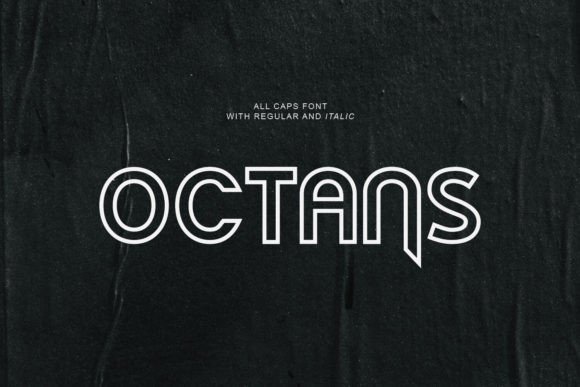
Right away, it felt different. Not flashy — but present. Octans is a display font with subtle geometric structure and confident letterforms: slightly tapered terminals, balanced contrast, and just enough personality to feel human without sacrificing polish. It’s not a script or a serif — it sits comfortably in that modern middle ground: structured enough for professionalism, expressive enough for warmth.
I dropped it into the H1 at 48px on desktop and watched how it held up over a soft gradient background. No shimmering, no thin strokes collapsing — the weight distribution gave it stability even at smaller sizes. On mobile, I scaled it to 36px and added modest letter-spacing (+0.5px). It remained legible, even with a light overlay on the image behind it. That’s rare for a display font.
What makes Octans especially useful in real web projects is its built-in stylistic alternates. In Figma, I toggled between standard and alternate ‘a’, ‘g’, and ‘y’ forms — small changes, big impact. For a portfolio site, I used the more open ‘a’ in the navigation logo; for a course sales page, I chose the bolder ‘g’ in the headline to reinforce grounded energy. These aren’t gimmicks — they’re thoughtful design tools baked right in.
Here’s where Octans shines most: short, high-impact moments. Hero titles. Section headers. CTA buttons (yes — even buttons, when sized at 20–24px with ample padding). It’s not built for paragraphs — and it shouldn’t be. Trying to use Octans for body copy would undermine both its strength and your users’ reading flow. But as a focal point? It guides the eye, reinforces tone, and quietly elevates perceived quality.
I tested it across contexts:
- A creative portfolio homepage, where Octans anchored the intro headline while Inter UI handled project descriptions — clear hierarchy, zero visual competition.
- A product landing page for a sustainable home goods brand: Octans in the hero, paired with a warm, neutral sans serif for benefits — the font added craft and care without feeling “designed”.
- A coaching website banner: used over a muted photo, with reduced opacity on the background layer. Octans stayed crisp, never washed out — even on mid-tier mobile screens.
Readability checks were straightforward but essential. On dark backgrounds, I confirmed the regular weight had sufficient stroke thickness — no vanishing letters. On light backgrounds with image overlays, I kept contrast high (at least 4.5:1) and avoided ultra-thin variants. And crucially: I checked how it rendered on Safari iOS. Some display fonts stutter on Apple’s text engine, but Octans loaded cleanly, no flicker, no fallbacks.
Font pairing is where Octans really earns its place. Think of it as the lead vocalist — strong, memorable, expressive — but it needs a steady rhythm section. I consistently paired it with a versatile, highly readable sans serif: Inter, Manrope, or even system-ui for performance-first projects. For editorial or brand-forward sites, a restrained serif like IBM Plex Serif or Literata worked beautifully — giving Octans room to breathe while adding typographic depth.
Before deploying it live, I verified practical details: the webfont package included WOFF2 (for compression), full Latin character support, and basic OpenType features — including those stylistic alternates. No extended Cyrillic or Arabic coverage, so I noted that for future international projects. Licensing was clear: commercial use permitted, no per-page fees, embeddable in client sites and SaaS dashboards. That peace of mind matters — especially when handing off design systems or templates.
One thing I appreciated during testing: Octans doesn’t try to do everything. It’s not a variable font. It doesn’t come with 12 weights or condensed variants. It’s focused — one well-crafted weight, one distinct voice. That focus makes decisions easier. When you need a headline that feels intentional, not incidental, Octans delivers without overcomplicating your stack.
It also subtly shifts how users perceive a brand. On a course sales page, Octans in the headline didn’t just say “Learn Design Systems” — it implied “This is crafted, considered, worth your attention.” That’s the quiet power of good typography: it builds trust before the first sentence is read.
For responsive layouts, I kept usage consistent: Octans only for H1–H3, never below 20px. Buttons got it at 18–20px with tight tracking and generous padding — always tested on thumb-sized tap targets. Never forced it into narrow columns or dense grids. Let it breathe. Let it mean something.
If you're selecting a display font for your next digital project — whether it’s a campaign landing page, a refreshed blog header, a product showcase, or a branded web kit — ask yourself: does it support your message, or distract from it? Does it scale gracefully? Does it pair well with your content’s voice and your users’ needs?
Octans passed every test I threw at it — not because it’s the most technical font, but because it’s thoughtfully made for real screens, real readers, and real brands building meaningful digital experiences.